Chronic pain in a senior cat is treatable, and it usually takes more than one approach at a time. Arthritis is the most common source, and it responds to a mix of prescription medication, joint and weight support, and changes around the house. Painful teeth are a close second, and those are fixed rather than managed, with dental X-rays to find the damage and extraction under anesthesia. Cats are experts at hiding how they feel, so this gets written off for years as normal slowing down, and untreated it costs real quality of life: less grooming, missed trips to the litter box, and muscle loss.
The hardest part of treating a sore older cat is often the visit itself. Cane Bay Veterinary Clinic is Summerville's only Fear Free Certified practice, so a stiff, anxious senior gets quiet handling, calming pheromones, and pre-visit medication when that is what it takes to examine tender joints without a struggle. Arthritis and a bad tooth call for different treatment, so we begin with an exam and X-rays to find the source, then check that a long-term medication is safe for your cat's kidneys before prescribing it. If your cat has stopped jumping onto the bed, schedule a senior wellness exam or give us a call and we will find out why.
How an Older Cat Shows You It Hurts
- Arthritis and painful teeth cause most of the chronic pain we find in cats over ten, and plenty of seniors are carrying both at once.
- Cats signal pain through changes in their habits and their faces rather than by crying out, so less grooming, missed litter box trips, squinted eyes, and flattened ears are what you're watching for.
- The plans that hold up combine a prescription medication with weight control, gentle movement, and a few inexpensive changes around the house.
- Human pain relievers are never safe to give a cat without veterinary direction, and ibuprofen or acetaminophen can be fatal at doses that sound far too small to matter.
What Causes Chronic Pain in Senior Cats?
Arthritis gets most of the attention, but dental disease, cancer, ear infections, and injuries sit on the same list of conditions that cause pain in pets, and a cat in her teens is often carrying more than one at once. Telling them apart is the first job.
Arthritis and degenerative joint disease wear down the cartilage in the hips, elbows, and lower spine over years rather than arriving one afternoon, and X-rays show these joint changes in most cats past their early teens. Nerve pain behaves differently, because damaged nerves keep firing after the original injury heals, which is why a cat may bolt out of a sound sleep or groom one patch raw. Kidney disease, hyperthyroidism, and cancer add their own load, and they make a senior feel lousy in ways that look like stiffness from the outside.
| Source of pain | What families notice at home | How we sort it out |
| Osteoarthritis | Stiff first steps after a nap, sleeping lower to the ground, hesitating at the cat tree | Hands-on exam of hips, elbows, and spine, plus X-rays |
| Dental disease and tooth resorption | Chewing on one side, dropping kibble, drooling, pawing at the mouth | Oral exam under anesthesia with dental X-rays |
| Degenerative spinal changes | Grumpiness when stroked near the tail, trouble squatting in the box | Spinal X-rays and a neurologic exam |
| Nerve pain | Skin twitching, sudden bolting, over-grooming one spot | Exam and bloodwork, then ruling out other sources |
| Kidney disease, hyperthyroidism, cancer | Weight loss, appetite swings, a coat that looks unkempt | Bloodwork, urinalysis, ultrasound |
Two sources need two different treatments, and guessing wastes months a senior cat doesn't have to spare. That's why senior wellness exams and diagnostics belong together once a cat hits about seven: the physical exam narrows it down, and our in-house diagnostics confirm it.
How Can You Tell If Your Cat Is in Pain?
Cats almost never limp dramatically or cry, so the tell is a change in routine. Hiding under the bed, a matted coat over the hips, a long pause at the bottom of the cat tree, and a shorter fuse when you pet one particular spot are all common pet pain signs that get filed under old age instead.
Grooming is the one families spot first, because a cat who can't twist to reach her lower back stops trying. The litter box is the one that gets cats into trouble, since stepping over a tall lip with a sore spine hurts enough that the rug starts to look like a reasonable alternative. Appetite drops when the mouth is the problem, and a cat with a resorptive lesion may sit by a full bowl looking hungry and walk away. None of this is stubbornness or normal aging.
| What you see | Aging on its own | More likely pain |
| Sleeping | Longer naps in the usual spots | The same nap, but on the floor because the bed is too high now |
| Grooming | A little less polish overall | Mats over the hips and tail base, or one patch licked bare |
| Litter box | No real change | Accidents right beside the box |
| Play | Shorter sessions, still interested | Won't start, or quits with an irritated flick and leaves |
| Handling | Same tolerance she's always had | Flinching, growling, or biting over one specific area |
Aging slows a cat down evenly, and pain changes something specific. A sore cat hides it hardest in an unfamiliar room, which is why Fear Free handling changes what we're able to find. A settled cat lets us flex a hip and watch her face, and a frozen one tells us nothing.
Can You Read Pain on Your Cat's Face?
Yes, and it is one of the most useful skills you can build. The Feline Grimace Scale scores five parts of the face: ears, eyes, muzzle, whiskers, and head position. Each earns a 0, 1, or 2, and a total of 4 or more out of 10 suggests your cat is hurting enough to need pain relief.
Veterinary researchers built the scale by comparing cats' faces before and after they received pain medication, and the changes turned out to be consistent enough that families can learn to spot them at home. Here is what shifts when a cat hurts:
- Ears: Upright and facing forward in a comfortable cat, pulled apart and rotated outward in a painful one.
- Eyes: Soft and open when relaxed, narrowed into a squint when she hurts.
- Muzzle: Round and loose when comfortable, drawn into a tighter oval with pain.
- Whiskers: Gently curved and relaxed, versus straight, stiff, and pushed forward.
- Head: Held level with or above the shoulders, versus dropped below them or tucked toward the chest.
Timing matters when you look. Check her when she is awake and resting, not eating, grooming, or drifting off, since sleepy eyes can pass for a squint. Watch from across the room for a minute instead of leaning in, then snap a photo in the same spot about once a week. Lined up side by side, those photos show us the cat who lives at your house rather than the one wedged in the back of the carrier.
The scale was designed mostly around short-term pain, like the hours after surgery or an injury. Arthritis can change the face more quietly, so a relaxed expression doesn't rule out chronic pain on its own. Pair the face with the habit changes above and the broader signs of pain in animals, such as posture, appetite, and how willingly she moves, and the picture gets much clearer. We use the same scoring during exams and rechecks, so what you track at home lines up with what we see here.
What Are the Treatment Options for a Cat in Chronic Pain?
A workable plan is built from three pieces: a prescription medication chosen around your cat's bloodwork, therapies that reduce how much of that medication she needs, and changes at home that take strain off sore joints. What's hurting decides which piece leads, so we start with an exam before recommending anything.
Which Medications Are Safe for Cats with Chronic Pain?
The drugs used to relieve pain fall into a handful of classes, including anti-inflammatories, opioids, and adjunctive medications like gabapentin. Cats process every one of them differently than dogs or people do, so a dose is calculated for the individual cat and never borrowed from the medicine cabinet.
Never give a cat human pain medication. Acetaminophen damages feline red blood cells at a fraction of a tablet, and ibuprofen injures the stomach and kidneys. A cat who gets one dose before the appointment often arrives sicker than the arthritis ever made her.
Solensia is a once-monthly injection given here in the clinic that targets the nerve growth factor driving osteoarthritis pain, and for cats who turn a daily pill into a wrestling match, that difference in delivery is often what makes a pain plan stick. Gabapentin covers nerve pain and takes the edge off car rides. NSAIDs, or non-steroidal anti-inflammatories, can be used in some cats for inflammation and general pain if their kidneys are healthy enough. Before starting any long-term medication we check kidney values and liver enzymes, then recheck them on a schedule, because an aging cat's numbers move. Most cats do best on two gentle approaches rather than one strong one.
Side effects usually announce themselves as small things first: softer stool, a flat mood, a skipped meal. If anything looks off in the first couple of weeks, call or text us rather than stopping the medication and waiting to mention it.
What Non-Pharmacological Therapies Help a Sore Cat?
Non-drug care starts with weight. Every extra ounce loads an already worn joint, so a measured feeding plan buys more comfort for a stiff cat than almost anything else available. Targeted movement and hands-on therapies build from there, and two or three working together beat any single one alone.
- Laser therapy: Laser therapy sends light energy into sore tissue to calm inflammation and support healing, and a session takes a few quiet minutes with no needles and no sedation. We run it here, usually in a series.
- Acupuncture: Acupuncture places very fine needles at specific points to release muscle tension and quiet pain signaling, and most cats settle into a session far better than you might expect. We don't perform it here, so we refer to a certified veterinary acupuncturist and fold the results back into the rest of the plan.
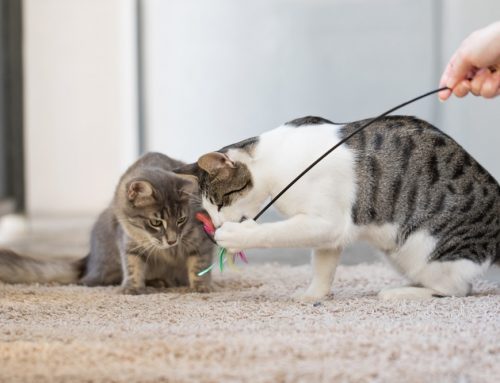
- Movement that fits: Two or three short wand-toy sessions at floor level keep hip and shoulder muscles doing their job without the jarring landings of a full sprint. Veterinary physical rehabilitation rebuilds strength and range of motion through targeted exercise and hands-on work, and keeping those muscles doing their job is often what allows a long-term plan to lean less heavily on medication.
- Warmth and joint support: A heated bed loosens stiff joints in the morning better than any supplement. Omega-3 fatty acids and a veterinary joint supplement are a reasonable addition once we know what else is on board.
Our veterinarians put the combination together around what your household will realistically keep up with, then adjust it as your cat responds.
What Changes at Home Make a Stiff Cat More Comfortable?
The home modifications that change the most for an arthritic cat are small and cheap: a litter box with one low side she can step over, soft bedding somewhere warm, and food and water raised enough that she isn't craning a sore neck down to the floor.
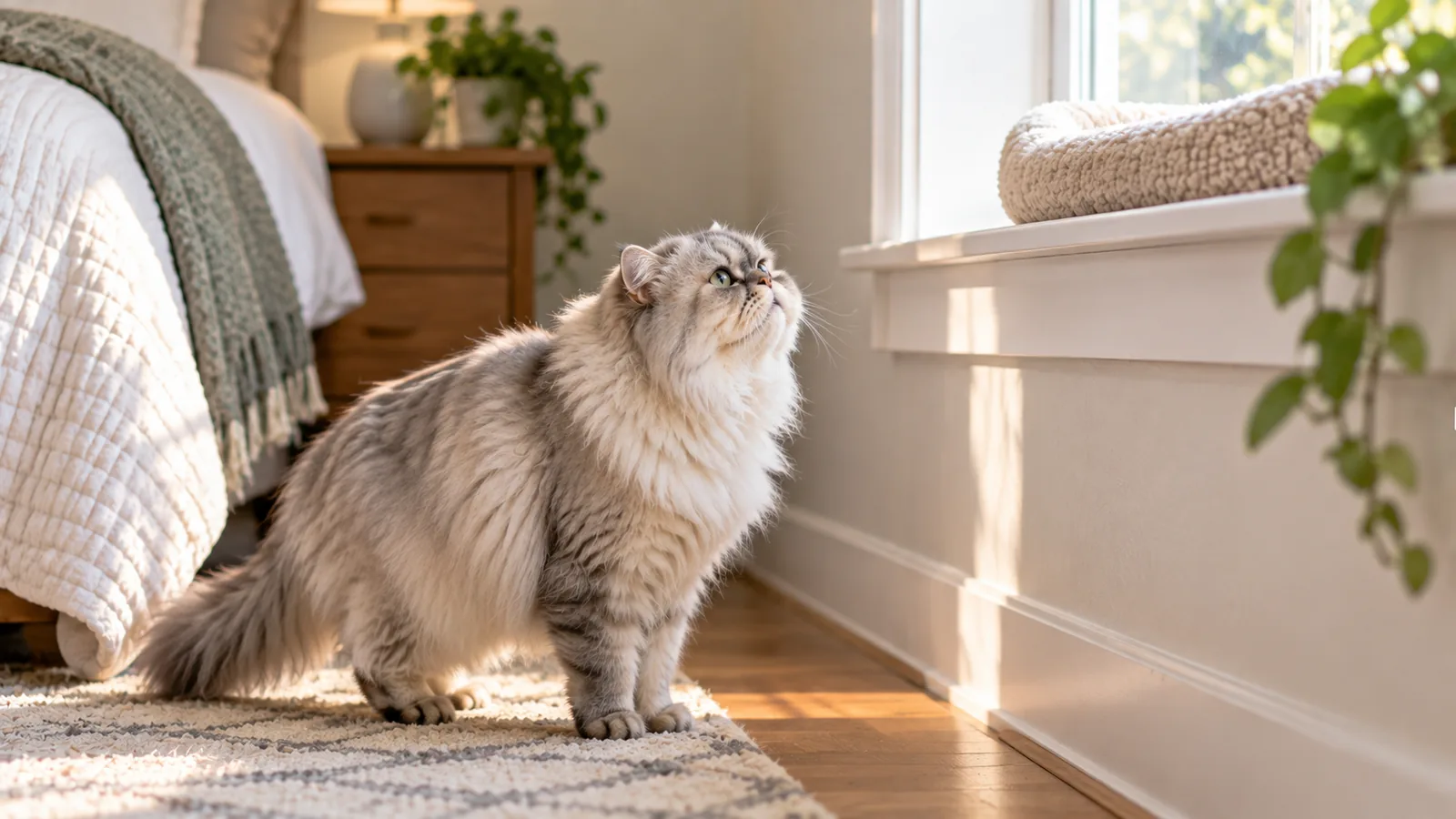
Try walking through her day from floor level. Keeping an arthritic cat comfortable mostly means removing the jumps, climbs, and cold hard surfaces she now has to work around. A ramp up to the favorite windowsill, a step stool beside the bed, and non-slip runners across the tile are mobility aids that hand a stiff cat back the vertical world she used to reach in one jump.
Grooming helps matters more than it sounds. A soft brush over the lower back and hips a few times a week prevents the painful mats that form where she can no longer reach, and nails need trimming more often now, since a cat who isn't scratching or climbing grows them straight into her paw pads. Check those pads monthly.
Keep the essentials on one floor if stairs have become a debate, and put a second water bowl wherever she naps. Every house is laid out differently, so we go over the specifics at the visit, based on which rooms your cat actually uses and what she's stopped attempting.
Why Do Senior Cats on a Pain Plan Need Regular Rechecks?
Chronic pain moves. A dose that fit in March can leave a cat sore by September. Scheduled rechecks let us pain-score the same cat over time, recheck kidney and liver values on long-term medication, look hard at the mouth, and repeat imaging when the picture changes. Our hospice care focuses on your senior cat's comfort, and regular rechecks allow us to modify the plan and talk through her quality of life with you.
Pain scoring is a consistent way of asking the same questions: how far does that hip flex now, what does her face say at rest, how does she hold her tail, what did you stop seeing her do at home. Video and weekly face photos from your phone help, because she moves and rests differently in her own hallway. Dental disease deserves its own look at every senior visit, since a resorptive lesion can develop between appointments and no amount of arthritis medication touches it.
When your cat's comfort slips, or when she's been steady for months and it's time to confirm the medication is still safe, book a recheck rather than waiting for the next annual.
How Do You Know If Your Senior Cat Still Has a Good Quality of Life?
A senior cat with a good quality of life still eats with interest, keeps herself reasonably clean, gets to her favorite spots on her own, seeks out her people, and rests comfortably. Tracking those basics week to week, rather than judging from one rough afternoon, shows whether her pain plan is working or needs to change.
Quality of life isn't a question saved for the very end. It's the scorecard for the whole pain plan, and asking it early is what gives us room to adjust while there's still plenty we can do. Many families find it easier to answer with a few specific questions in front of them:
- Hurt: Is her pain controlled when she stands up, jumps down, or climbs into the box?
- Hunger: Is she eating enough to hold her weight, or walking away from the bowl?
- Hydration: Is she drinking normally, or does she seem dry and flat?
- Hygiene: Can she keep her coat and back end clean, and is she using the litter box?
- Happiness: Does she still greet you, purr, and look for a lap or a sunny spot?
- Mobility: Can she reach her food, water, box, and bed without help?
- More good days than bad: Over a week, do the good days still outnumber the hard ones?
Two simple habits make those answers honest. Keep a calendar on the fridge and mark each day as good or hard, since a slow slide is easy to miss when you live with it. Then write down three or four things that make her who she is: bird-watching from the window, a morning lap, the crinkle ball she carries to your door. When most of those fade despite a solid plan, it's time for an honest conversation. Our hospice and comfort care shifts the focus fully to keeping her peaceful, and we'll walk through every option with you without pressure. You never have to make that decision alone.
Questions We Hear About Sore Senior Cats
Can I Give My Cat Something From My Medicine Cabinet Until the Appointment?
No human pain reliever is safe to give a cat on your own, and this is the one rule with no exception. Acetaminophen destroys feline red blood cells and can kill a cat with a single dose. Ibuprofen, naproxen, and aspirin cause stomach ulcers and kidney injury. Even leftover medication prescribed for your dog is dangerous, because the metabolism is different. If your cat seems painful tonight, call us in the morning and we'll get her seen.
Is Anesthesia Safe for a Dental on a Fifteen-Year-Old Cat?
A birthday on its own doesn't rule out anesthesia, and we treat plenty of cats well into their teens. What matters is what the workup shows, so we check bloodwork and cardiac function beforehand and build the protocol around those results rather than around her age. The real risk usually runs the other way: leaving a fractured or resorbing tooth in place means months of constant pain that no medication fully covers, plus a cat who slowly stops eating well.
Will My Cat Need Pain Medication for the Rest of Her Life?
It depends on what's causing the pain. A painful tooth usually stops hurting once it's removed and the mouth heals. Arthritis doesn't go away, so most cats with it do best on some form of ongoing management, but the plan isn't fixed. Weight loss, home changes, and steady gentle movement can let us lower a dose, and many families notice their cats need a little more support on damp Lowcountry winter mornings than in midsummer.
Senior Cats Feel Better When Pain Gets Treated, Not Tolerated
The cats who stay comfortable into their late teens are usually the ones whose families noticed something small and said so: she's grooming less, she sleeps on the floor now, she squints at the window, she growled when I touched her back. That's the information we need, and it almost always points somewhere treatable.
If your cat has quietly given up a favorite perch, schedule a visit at Cane Bay Veterinary Clinic in Summerville and we'll find out what's behind it.