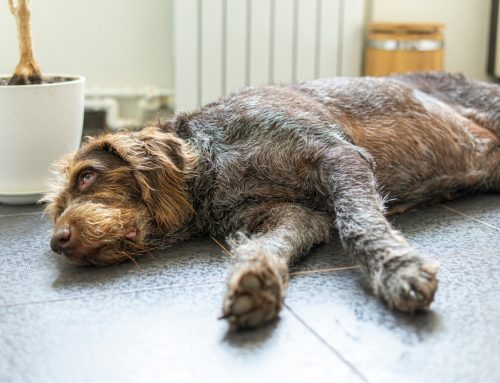
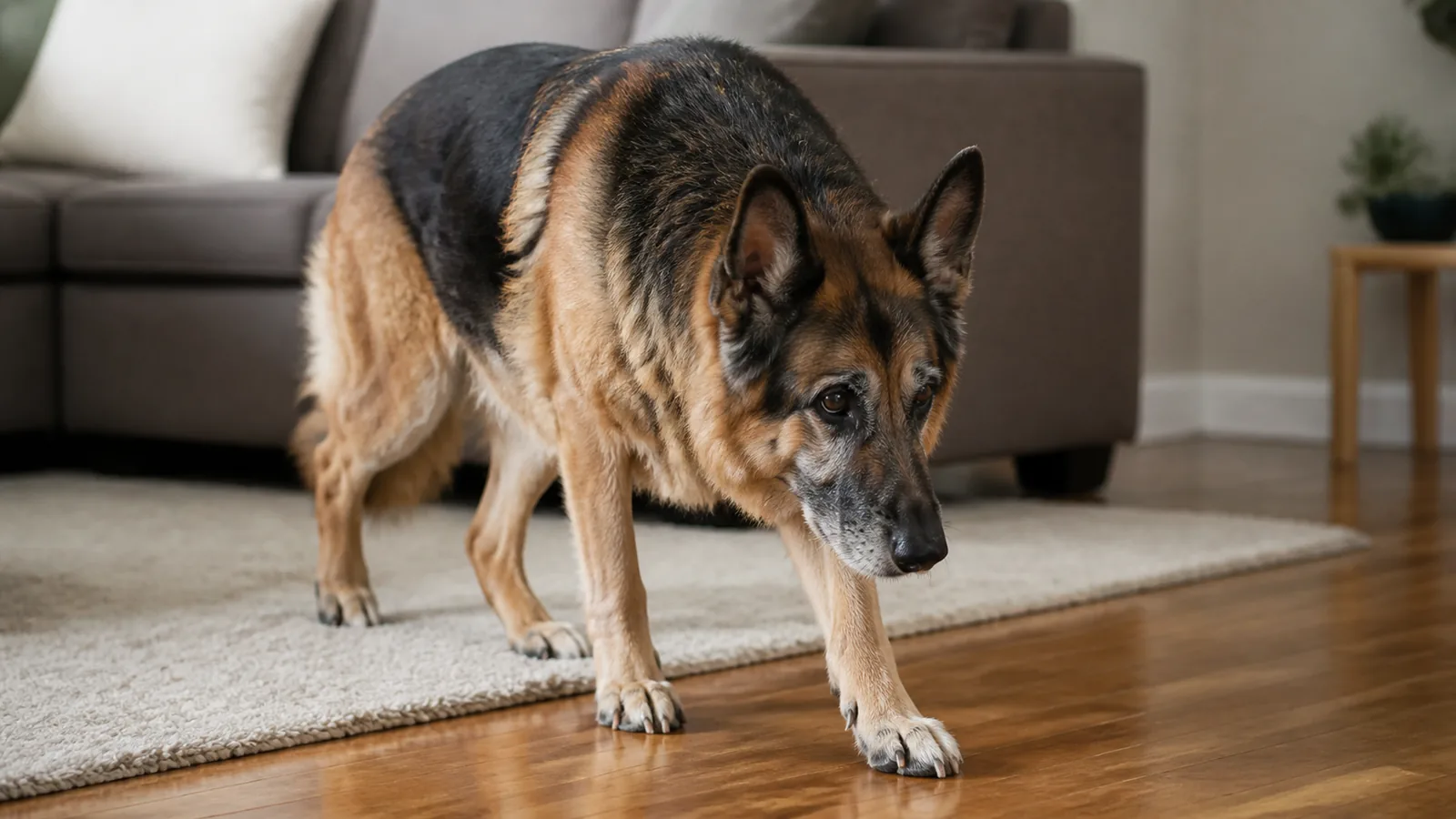
Mobility aids help a senior pet move better, and they do their best work before the struggle is obvious. The first one is not a harness or a cart but traction underfoot: rugs and runners across slick tile and hardwood, short nails, rubber grips on nails, and tidy paw fur. Ramps, lifting harnesses, and wheeled carts come next as needs grow, alongside a lean weight, steady exercise, and early joint support. A dog or cat who never learns to fear the floor holds on to muscle, confidence, and momentum, so a hesitation at the edge of the tile or before a jump that used to be automatic is worth acting on now. Rebuilding all three after a fall is much harder than protecting them today.
At Cane Bay Veterinary Clinic in Summerville, we look for these early changes at senior wellness visits, where a hands-on orthopedic exam and digital X-rays can tell us whether arthritis is behind the slowdown and how far it has progressed. From there we pair senior preventative care and pain management with the gear that actually fits the need. Because we are a Fear Free certified practice, your pet gets calm, unhurried handling even when their joints are sore. If you have noticed that hesitation at home, request an appointment and we will help you get ahead of it.
Matching the Aid to the Stage
- When a senior pet starts slowing down, something specific is usually responsible, and that something can usually be treated.
- Each stage has its own tool: better footing early on, a harness once rising gets hard, wheels when the back legs stop holding weight.
- The condition driving the change, whether that's arthritis, disc disease, or a nerve disease, tells you what support will look like six months from now.
- The device is one piece of the plan. Pain control, a lean weight, and rehabilitation do as much work as any product on the shelf.
Is It Just Age, or Something We Can Treat?
Age by itself explains nothing. The post-nap stiffness and the slower climb up the back steps usually come down to osteoarthritis in dogs and cats, which is a disease we can manage, not a toll every pet simply pays. Putting a name to the change comes before buying any gear.
Timing does most of the work here. A senior dog with muscle still in reserve keeps that muscle when support arrives early. Hold off until the struggle is unmissable and the rebuild starts from behind, often after a fall that taught your dog to distrust the kitchen floor. Compensating for one sore hip also loads the front end and the spine, which is how a single painful joint quietly becomes three.
So the first move is an exam, not a purchase. Feeling each joint through its range tells us where the pain sits and whether the weakness is coming from the joints or the nerves, and our in-house diagnostics fill in the rest, including the bloodwork that tells us which pain medications your pet's kidneys and liver can safely handle.
What's Behind the Weakness in Their Back End?
Several conditions drive hind-end weakness, and the label matters because it predicts the next six months. Arthritis and hip dysplasia change slowly and respond well to pain control. Disc disease and spinal strokes hit fast and often improve. A degenerative nerve disease moves in one direction only, so the plan has to stay a step ahead of it.
Arthritis wears through the cartilage in hips, knees, elbows, and the lower spine, and it shows up as a shorter stride long before it shows up as a limp. A rear-support harness smooths the transitions while medication, weight loss, and exercise work on the joint and muscle strength itself.
Disc disease can arrive quickly or progress over years. Intervertebral disc disease can press on the spinal cord and take a dog from normal to dragging a hind leg inside a day, with the recovery built around weeks of supported walking with a harness. Some pets progress to full paralysis, but still live a full life with a wheelchair cart.
Degenerative myelopathy progresses steadily and without pain, so its support plan is a staircase measured in months: footing first, then a harness, then wheels. Because the direction is known, planning ahead matters more here than it does with arthritis, and hospice and comfort care becomes part of that conversation when families are ready for it.
The Three Stages of Mobility Loss and What Each One Needs
Mobility loss tends to move through three rough stages, and the right support shifts with each one.
| Stage | The signs at home | The right support |
| Early | Post-nap stiffness, paws sliding on tile, slower stairs, a skipped jump | Better footing, rugs and ramps, lean weight, joint support |
| Moderate | Needs a boost to stand, tires halfway through the walk, sways or scuffs behind | Support harness, prescription pain control, rehabilitation |
| Advanced | Standing and pushing off with the back legs stops working, a limb drags | Wheels, a full-body harness, close skin and bladder checks |
Pets rarely move through this neatly. Some conditions skip a stage in an afternoon, and a good week can look like a stage backward. The framework is still useful for separating what your pet needs today from what's worth planning for next.
What Helps When Your Dog Is Just Slipping on the Floor?
Early on, the legs work fine and the floor is the enemy. Rubber toe grips ride on the nails themselves, leaving the paw pads free while giving tile and hardwood something to hold onto, and often that ends the scrabbling on its own. Short nails and trimmed paw fur do their part too.
Traction booties add grip on slick indoor floors and rough outdoor footing alike, though most senior dogs need a few short, upbeat sessions before they stop high-stepping in them. Plenty of Summerville homes run tile or laminate wall to wall, which is a hard surface for an arthritic back end to trust. Runners down the hardwood, a ramp over the back steps, and steps up the couch are the home changes for an arthritic dog that quietly allow them to maintain their routines every day of the week.
Make one change at a time. Rearrange the whole house overnight and a senior pet tends to dig in and boycott the very thing meant to help. The same ramp, brought in over a week with treats at the top, usually gets used without a fight.
Why Did My Senior Cat Stop Jumping on the Windowsill?
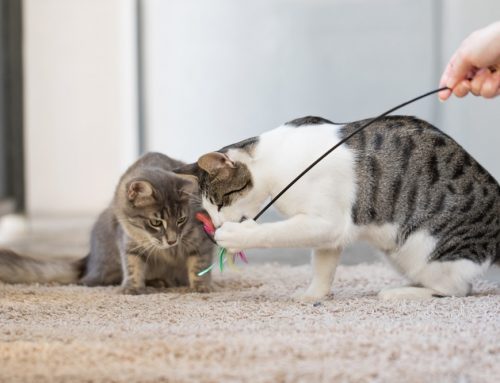
Cats hide pain remarkably well, so joint disease shows up as a change in habit rather than a limp. A cat who gives up the windowsill is telling you the landing hurts, and that quiet edit to her routine is the most common way feline arthritis announces itself, easy as it is to write off as getting older.
The signs worth noticing are small:
- Stairs one at a time: taken slowly, with a pause at the top or bottom.
- Hesitation at the litter box: a long look at the rim, or accidents just outside a high-sided pan.
- New sleeping spots at floor level: the tall shelf traded for a folded blanket on the rug.
- A dull or matted coat over the back and hips: turning and reaching to groom back there has become painful.
- Less play, more sleep: often read as personality, frequently pain.
A cat showing those shifts has earned the same workup we'd give a limping dog. Sore joints also make an exam harder, which is where Fear Free handling earns its keep with a stiff senior cat: low-restraint positioning, an exam on the floor or in the bottom of her own carrier, and pre-visit calming medication when it helps. That's often what lets us get a real feel for the hips.
A litter box with one low side, a step up to the favorite windowsill, and soft bedding at floor level are the home modifications for cats that keep a stiff senior cat using the spots she has always loved. For many cats, that's enough.
When Is It Time for a Support Harness?
A harness earns its place the moment your dog needs a hand to get up off the floor or down the back steps and still has real strength to work with. That's the middle stage: shorter walks, a sway in the back end, a slower rise from a nap, but legs that hold weight once they're under him.
| Harness style | Best for | Fit problem to watch |
| Rear-support | Hip and back-leg weakness | Straps riding up into the groin |
| Front-support | A weak, injured, or missing front limb | Rubbing behind the elbows |
| Full-body | Weakness in more than one limb | Chest piece sliding forward under load |
A rear-end harness cradles the hips and puts a handle in your hand for the two moments that matter most, getting up off the floor and getting up and down the stairs. Once weakness involves several limbs, a full-body support harness shares the lift between chest and hips, sparing you from hauling a pet upright by the back end alone.
Two smaller tools help when the toes start dragging. Elastic support bands that run from a harness down the back legs cue better foot placement and keep those muscles firing on the walk. Knuckling socks protect the top of the paw from scuffing in a dog who has started dragging toes.
Fit matters more than brand, every time. A harness that rubs a raw patch or slides forward under load trades one problem for another. Bring yours along to the next visit and our doctors and technicians will watch your dog move in it and adjust from there.
Can a Cart Really Give a Dog Their Life Back?
A cart isn't the end of the road. For plenty of senior dogs it's the thing that reopens it. Mobility carts for dogs carry the weight of the back end, so a pet who can no longer push off still walks the yard, sniffs the fence line, and comes along on the evening loop.
A cart works best as gear for outings rather than an all-day chair, and time out of it still matters for rest, skin, and sleep. It also has to be measured and fitted precisely, because a frame that sits wrong rubs pressure sores into skin that can't feel the pressure. A dog who has lost feeling behind needs a daily look at the skin and a check that the bladder is emptying. Expect a week or two of short, cheerful sessions before your dog forgets they're wearing it, and plenty of dogs go on living busy, nosy lives on wheels for a long stretch afterward.
What Else Does a Mobility Plan Need Besides the Device?
Gear buys traction and leverage; it doesn't treat what's happening inside the joint. A plan that keeps a senior pet moving pairs any aid with pain control, a lean body weight, and targeted exercise, then gets revisited as things shift.
- Pain control: anti-inflammatories are the backbone for arthritis, and monthly monoclonal antibody injections that block arthritis pain are an option for dogs and for cats. Gabapentin and similar add-ons cover the nerve pain that comes with disc and spinal cord problems.
- Weight: shedding even a pound or two off a sore hip often does more than any single product, and it's the one change that helps every joint at once.
- Supplements: joint supplements and omega fatty acids can support cartilage and dial down inflammation, and we'll tell you honestly which ones are worth your money for your pet's situation.
- Rehabilitation: veterinary physical rehabilitation builds the strength and balance behind every device, using targeted exercises to protect the muscle a senior pet still has. Therapeutic laser can take the edge off stiff joints between medication adjustments.
- Rechecks: a senior pet's needs move over months, not years, so it's worth planning to schedule a recheck rather than waiting for the next obvious slide.
One hard line: human pain medication is never the answer. Small doses of ibuprofen, naproxen, or acetaminophen can hurt a dog badly and kill a cat. Call us first and we'll get something safe on board the same visit.
Mobility Aid Questions Pet Families Ask Us Most
Will a support harness make my dog's legs weaker?
Not if it's used as intended. The harness covers the moments that have become too hard, the rise off a slick floor or the three back steps, and your dog does the walking in between. Weakness comes from doing less overall, not from a hand under the hips. The dogs who lose ground fastest are the ones who stop moving because moving got scary.
How long before a dog gets used to a cart?
Most dogs settle in within one to two weeks of short, upbeat sessions. Start in a familiar place with a clear destination, keep the first outings to a few minutes, and end while things are still going well. Some dogs take off down the driveway on day one. Others need a week of sniffing the frame before they'll step into it, and that's normal, not a sign it won't work.
My pet is 14. Is it too late for any of this to help?
Rarely. Traction underfoot and a lower litter box or a step to the couch pay off within days, no matter the age, because they remove obstacles rather than asking for new strength. Pain control often does more for a very senior pet than for a middle-aged one. Age doesn't decide the plan either; what your pet's heart, kidneys, and joints look like on an exam does.
Facing Your Senior Pet's Mobility Changes Together
A slower senior pet doesn't have to be a sidelined one. The right aid for the stage, paired with pain control, a lean weight, and steady exercise, keeps most dogs and cats comfortable and in the middle of family life far longer than people expect. It starts with naming what changed, which is a good part of what senior wellness visits are for.
If your dog has started slipping on the tile, or your cat has quietly given up her windowsill, that's worth a conversation rather than a wait-and-see. Reach out to us at Cane Bay Veterinary Clinic in Summerville, and we'll sort out together where your pet is right now and what will help the most.