A puppy or kitten who misses early socialization carries that gap into adulthood, and it shows up as fear of ordinary things: strangers reaching toward them, nail trims, other dogs on the sidewalk, the carrier by the door. In dogs that tends to look like reactivity, guarding, or noise sensitivity; cats are more likely to hide, swat, or stop tolerating handling. A vet visit that combines strangers, handling, car rides, and carrier can become a truly traumatic experience for dogs and cats who aren't exposed the right way. These patterns get harder to change the longer they run, because every frightening repetition teaches the same lesson again.
None of that means the chance has passed, and many adult dogs and cats make real progress with a deliberate plan. Cane Bay Veterinary Clinic in Summerville was built around the pet who dreads coming here. Our Fear Free care shows up in the pheromones diffused through the building, in how quickly we move you out of the lobby and into a room, and in a team trained to work at your pet's pace instead of pushing through. Puppy visits and kitten wellness exams with us cover socialization and training, not just vaccines, and if your dog or cat is already grown, we can start with calming medication before the appointment and keep the exam low-pressure. If your pet is nervous about new people or handling, ask us how we can help.
What Prevents Anxiety, and When to Start
- The socialization window closes early: start the week your pet comes home, not after the vaccine series.
- Good socialization is short, positive, and controlled: known vaccinated dogs and your living room, not dog parks and crowds.
- Reward-based training and a predictable daily routine prevent more adult anxiety than any product on a shelf.
- A behavior that changes suddenly is a medical question before it's a training question.
How Do I Know If My Pet Is Scared and Not Just Being Difficult?
Fear shows up well before a growl. Lip licking, yawning when nobody is tired, a tucked tail, and a head turned away are the stress signals that come first. A pet who snaps at the groomer or lunges at the dog passing by is usually just uncomfortable and out of better options to communicate their fear.
| Signal | Comfortable | Worried and escalating |
| Body | Weight centered, willing to approach | Crouched, leaning away, or frozen still |
| Tail | Dogs: loose and swinging. Cats: upright or softly curved | Dogs: tucked. Cats: thrashing or clamped down |
| Ears | Forward or neutral | Pinned sideways or flattened back |
| Eyes | Soft and blinking | Wide, whites showing, or a hard stare |
| Mouth | Relaxed, easy pant in dogs | Lip licking, yawning, tight closed mouth |
A growl or a hiss is useful information, and punishing it is the one thing we ask families not to do. Correct a dog or cat for growling or hissing enough times and the warning disappears while the fear stays, so you end up with a pet who skips the warning and goes straight to teeth. When you hear one, add distance and stop what you were doing.
Why Does the Socialization Window Matter So Much?
Socialization has a window that closes early: puppies take in new people, surfaces, and sounds most readily between about three and fourteen weeks of age, kittens between about two and seven weeks. Inside that stretch, new experiences get filed as normal instead of threatening. After it narrows, caution becomes the default, and unfamiliar things read as threats.
The timing is tighter for cats, because a kitten's most receptive weeks are usually over before adoption day. That puts much of the work on the breeder, shelter, or foster home, and makes your handling in the first weeks at home especially important.
Which Introductions Should a Puppy or Kitten Get First?
Good socialization is a string of short, pleasant introductions your pet chooses to walk toward, not a weekend of crowds and passing hands. New people, animals, surfaces, sounds, and handling get paired with food and praise at a distance where your pet stays loose and curious.
Overwhelm teaches the opposite. A puppy hiding behind your legs at a street festival is learning that the world is too much, and a kitten passed around a party is learning that people grab. Back off at the first lip lick or turned head.
| What to introduce | For puppies | For kittens |
| People | Men with beards and hats, kids, people using canes or wheelchairs | Visitors who sit on the floor and wait |
| Other animals | Known, vaccinated, calm-tempered dogs | A settled resident pet behind a baby gate first |
| Surfaces | Grass, gravel, metal grates, wet tile, stairs | Cardboard, carpet, a scratching post, a wobbly box lid |
| Sounds | Vacuum, doorbell, storm recordings at low volume | Hair dryer, blender, washing machine from the next room |
| Handling and vet-type practice | Paws, ears, mouth, nails, standing on a scale | Being lifted, toweled, napping in the carrier |
Kittens do most of this work indoors, and since there's no class to sign up for, it only happens if you build it into the week.
What's the Safest Way to Start Socializing a Puppy or Kitten?
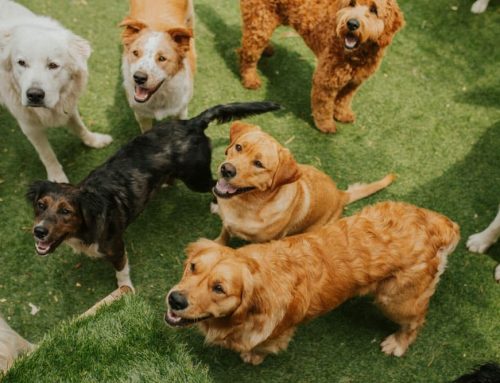
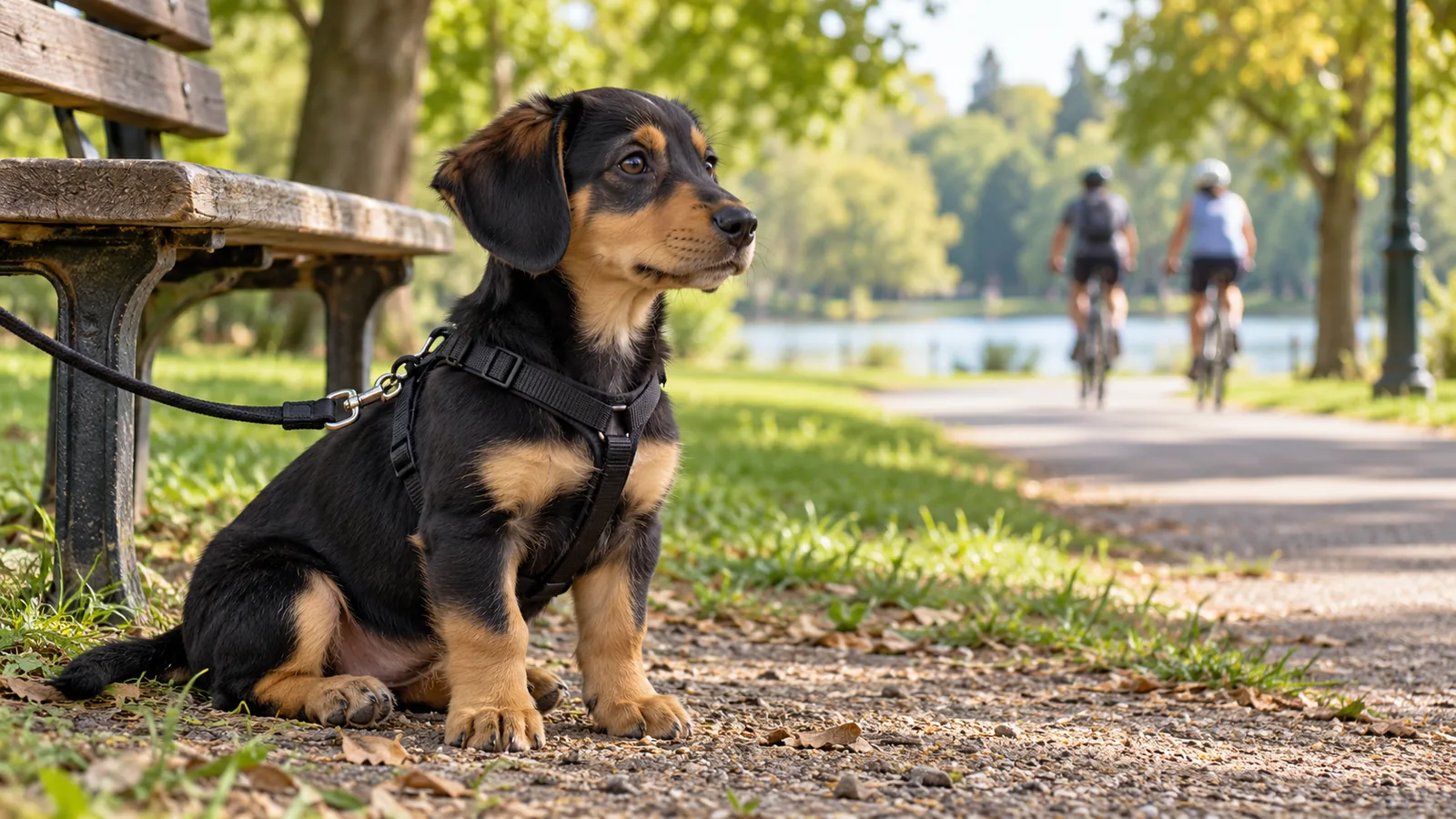
Safe early socialization happens in places you control, not places you hope will be fine. A structured class with known, vaccinated dogs, your living room, and a bench on a quiet Summerville street all work well. Skip dog parks and busy public lawns for now.
Are Puppy Classes Safe Before the Vaccine Series Is Done?
Puppy classes can begin before the vaccine series is finished, as long as a puppy has had a first set of vaccines and a deworming at least seven days beforehand. The behavioral cost of waiting until sixteen weeks outweighs the infectious risk inside a clean, controlled class. The dog park is where that calculation flips, because parvovirus can survive in soil for up to a year and a public lawn gives you no way to know who was sick on it last month. Our preventive care schedule brings puppies and kittens back every few weeks through about four months, which is the right time to ask which outings make sense.
How Do I Get a Cat to Stop Hating the Carrier?
Carrier training works once the carrier stops being a once-a-year object and becomes furniture: left open in a room the cat likes, with treats and a familiar blanket inside. Feed a few meals in it. Shut the door for a few seconds, then open it again before your cat worries.
Why Does My Dog Lunge at Bikes and Skateboards?
Wheels trigger a chase-or-flee response, and a puppy who never watches cyclists roll past from a comfortable distance often becomes the adult dog who lunges at every bike, stroller, and skateboard. Find a bench far enough from a path that your puppy notices without reacting, and every time something rolls by, they get a treat. Let them sniff stationary bikes and boards, backing off a step if they show fear.
Does the Way I Train Change How Anxious My Pet Becomes?
How you train changes the odds, and two choices matter most: what gets rewarded, and how predictable the day feels. Neither one depends on a class or a product you have to buy. A puppy or kitten who learns that trying things pays off, in a house where meals and quiet hours land in roughly the same order, has less to be anxious about as an adult.
Why Do Rewards Work Better Than Corrections?
Positive training pays a puppy for guessing right, so they keep offering behavior instead of freezing, while corrections teach that the safest options are shutting down or escalating. A dog who gets leash-popped for barking doesn't find other dogs less frightening; they learn that you, the person they are supposed to trust, adds more fear to an already stressful situation. Aversive tools and harsh handling are linked to increased risk of fear and aggression. Our Fear Free Certified Professionals work the same way in the exam room, reading the moment a cat or dog has had enough and stopping there.
Do Routines Really Matter That Much?
Predictability lowers a pet's baseline anxiety, and cats depend on it most: meals, play, and quiet hours in roughly the same order every day give a cat less to brace for. Schedules break, so hold the anchors you can. Feed at the usual times, leave the litter boxes where they've always been, and give each pet a spot nobody else uses.
Can I Teach My Pet to Tolerate the Vet and the Groomer?
Your pet can learn to tolerate the vet and the groomer, and the work starts weeks ahead at home. For cats especially, the vet visit begins at home: ten-second sessions of touching paws, lifting a lip, and looking in ears, each followed by something your pet likes. That's cooperative care, and it turns a pet who has to be held into a pet who participates.
Teach a chin rest, or a paw dropped into your palm, and give your pet a way out: stop when they move away, start again when they come back. Grooming follows the same rule. Clip one nail, reward it, and quit.
Mouth practice pays off twice, since dental care begins with an awake oral exam, and a dog or cat whose lip gets lifted at home barely registers it. A calm patient also means better information, because a panicking pet's heart rate and breathing tell us about the panic instead of their heart. Fear Free visits give a young pet a low-pressure version of all of it before they need the real thing.
Which Anxiety Problems Can Early Training Prevent?
Early training can head off many of the problems that eventually send an adult pet to a behaviorist, because most of them started as a small fear nobody addressed, and eight weeks old is an easier starting point than three years old.
Leash lunging looks like aggression and often isn't. Reactive behavior on leash is usually fear asking for distance, so adding space does more than adding correction, and the early version is small: your puppy glances at another dog, you say "yes," and they turn back to you for a great treat. Resource guarding starts earlier than most families expect, and the trade game teaches a puppy that a hand reaching toward a chew predicts something better showing up, which is the opposite of what taking food out of the bowl teaches. Walk past and drop a piece of chicken in instead.
Being left alone is worth preparing for before it's a problem. Separation anxiety shows up as pacing, howling, destruction aimed at doors and windows, or accidents from a reliably house-trained pet, and you can build independence from the first week with brief departures, naps behind a baby gate while you're home, and no drama at the door. Noise aversion, a true fear of loud sounds, ranges from a dog who leaves the room at the first firework to one who claws through a door during a thunderstorm, and desensitization works best early: recordings below the volume that worries your puppy, paired with dinner, then nudged up over weeks.
Friction between housemates is usually a resource problem before it's a personality problem. Much of the tension among cats comes down to one litter box, one food station, and one sunny windowsill for three cats. Add boxes, feed in separate rooms, and build vertical space so a cat can leave without a confrontation.
Is My Pet Anxious, or Just Bored?
Boredom and anxiety can look alike. A dog bred to work all day and given a ten-minute walk will find something to do, and it's usually chewing the baseboards. Unmet instincts like sniffing, chewing, chasing, and shredding surface as restlessness and destruction that looks like a training failure.
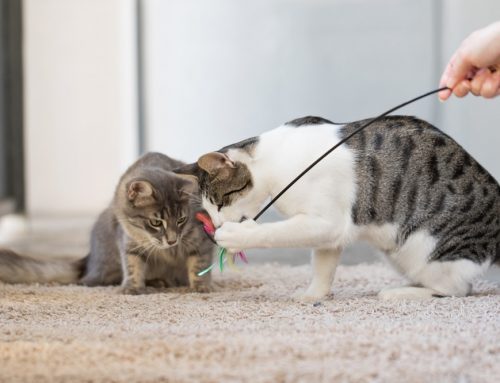
Dog enrichment costs almost nothing: kibble scattered in a muffin tin under tennis balls, or a walk where the dog picks the route and is given ample time to sniff. Cats need the same in a smaller footprint, such as a wand toy worked like prey until they catch it, a paper bag, a window perch, and food hidden in a few places instead of one bowl. Hunting ends in a meal, so feed right after play.
Calming supplements, pheromone diffusers, and anti-anxiety medication have a place when fear runs deeper than enrichment and training can reach on their own. Talk with us before you add one, and we'll look at how it fits with the other medications your pet is taking.
Could a New Fear Be a Medical Problem?
A behavior that changes suddenly is a medical question first. Pain, a neurologic change, a thyroid or other hormonal shift, and fading vision or hearing can all surface as new fear, irritability, or clinginess before anything else looks wrong. A behavior plan laid on top of an untreated problem won't hold.
The dog who starts growling when lifted may have a painful back. The cat who abandons the litter box may be bracing for discomfort, or struggling to climb over the lip of it. A senior pet who barks at family members in the evening may be losing sight, or sliding into cognitive decline.
We start with an exam and bloodwork, and X-rays can show whether pain in the spine or a joint is driving it. Call us when a behavior shifts over days rather than months and we'll get your pet in. A pet who seems painful or disoriented should be seen that day, even if that means an emergency clinic rather than waiting for Monday.
Questions About Preventing Anxiety In Pets
My puppy is six months old. Did I miss the socialization window?
The most receptive stretch has passed, and that changes the pace rather than the outcome. A six-month-old puppy still learns fast, and plenty of late starters grow into comfortable adults on controlled introductions, rewards for calm, and no forced exposure. Progress comes in smaller steps, so start this week and let your puppy choose the distance.
Should I comfort my dog during a thunderstorm, or does that make the fear worse?
Comfort your dog. The old worry about reinforcing fear doesn't hold up, because fear isn't a behavior you can accidentally reward into existence. If your dog wants to press against you, let them, and keep your own reaction calm and ordinary. What does make things worse is punishment, or pulling a frightened pet back toward whatever is scaring them. For dogs whose panic is severe, medication prescribed ahead of storm season helps, and that's worth a conversation before summer.
Do indoor-only cats need socialization at all?
Indoor cats need it as much as any dog does. A cat who only ever meets one household and one set of hands tends to hide from visitors, resist nail trims, and panic at the sight of the carrier. Home-based work covers nearly all of it: different people sitting on the floor and waiting, handling paired with food, a carrier left out year-round, and short car rides that end somewhere other than a clinic.
The Easiest Time to Prevent Anxiety Is Right Now
Every car ride, nail trim, and exam your pet will face is shaped by what these first few months teach them. Many of the anxious adult dogs and cats we see in Summerville learned to dread the carrier years before anyone tried to change it. Book a puppy or kitten wellness visit at Cane Bay Veterinary Clinic and bring every question you have about biting, classes, crates, and carriers. Our Fear-Free team would love to help set your pet up for a lifetime of better behavior and less stress.